

The Eight Truths of Transformer Reliability
Articles & Papers Jon BucciarelliContents:
Key Questions | 8 Truths | Conclusion | About the Author
Introduction
Transformer failures are not just electrical events—they are reliability failures, business disruptions, and sometimes, reputational crises. This article is especially valuable for power system reliability engineers, maintenance planners, asset managers, and testing contractors who are responsible for extending transformer life, preventing failures, and building scalable, data-informed reliability programs.
As power demand increases and infrastructure ages, transformer reliability has become a core priority for utilities, industrial operators, and mission-critical facilities alike. Yet, despite decades of learning and advances in monitoring, many reliability programs still fall short in transforming data into resilience.
At SDMyers, this challenge is addressed through the MaxLife® philosophy—a reliability approach grounded in more than six decades of transformer maintenance, oil analysis, and lifecycle data. MaxLife is built on a simple but proven principle: the life of the transformer is the life of the paper. When operators understand how heat, moisture, oxygen, and loading interact to age insulation, they can extend reliable transformer life well beyond industry expectations.
Key Questions to Consider
Before diving into the eight truths, it helps to reflect on the questions that define what is at stake for electric power systems and the people who maintain them, including asset criticality, defining a plan, environmental factors, getting the big picture, and gaining insights that drive improvements.
1. Why is asset criticality more important than asset age in transformer maintenance planning?
Because not all transformers serve equally vital roles.
An older transformer in a non-critical location may pose less risk than a newer unit feeding a mission-critical process. Prioritizing by criticality ensures that limited maintenance resources are allocated to assets whose failure would cause the greatest disruption.
2. What is the danger of relying on monitoring systems without a clear action plan?
Monitoring without response turns valuable data into noise.
Reliability suffers when teams collect diagnostics but lack defined thresholds, escalation protocols, or authority to act on the insights—leading to preventable failures.
3. How do moisture and oxygen affect transformer reliability?
Moisture and oxygen accelerate paper insulation degradation and oil oxidation.
Their presence—especially in free-breathing or poorly sealed units—can silently reduce dielectric strength and increase the risk of failure long before external signs appear.
4. What does it mean that “reliability is a system, not a test”?
No single test guarantees transformer health.
True reliability is the outcome of an integrated system—where diagnostics, monitoring, training, asset history, protocols, and decision-making processes all work together in a coordinated, intentional way.
5. How can organizations use fleet-level insights to improve reliability across all transformers?
By evaluating transformers as a collective fleet.
Using condition, criticality, and performance data, organizations can identify weak links, optimize testing schedules, prioritize replacements, and avoid over-maintaining healthy units or missing at-risk ones.
The Eight Truths of Transformer Reliability
Truth 1: Not All Transformers Are Created Equal
Asset criticality must shape your strategy.
A one-size-fits-all maintenance approach overlooks one of the most important dimensions of transformer reliability: criticality. High-priority assets require higher scrutiny and more proactive testing protocols. An effective reliability program begins by categorizing transformers not only by size or age but also by the consequences of failure.
True asset criticality combines the consequence of failure with condition data. Fleet reliability programs that benchmark assets across condition, loading, design, and operational importance enable better prioritization of monitoring, maintenance resources, and capital investments.
Truth 2: The Oil Always Tells a Story
Transformer oil is more than an insulator—it’s a diagnostic window into the health of the unit.
DGA, dielectric strength, interfacial tension, and furan testing provide insights into thermal stress, arcing, overheating, insulation breakdown, and moisture intrusion. However, oil analysis only tells a part of the story. Without proper interpretation—especially trend analysis over time—raw data becomes noise.
Effective reliability programs rely on a consistent testing portfolio—typically including DGA, Karl Fischer moisture, interfacial tension, neutralization number, liquid power factor, and furan analysis—interpreted in the context of transformer design, operating stress, and historical trends.
Truth 3: Temperature Is the Silent Killer
Every 10°C rise above design temperature can cut insulation life in half.
Elevated temperatures accelerate cellulose aging and hasten the accumulation of dissolved gases. Load tap changers, restricted airflow, harmonics, or excessive ambient heat can exacerbate this risk. Industry aging models indicate that thermal stress and moisture interact to accelerate insulation degradation.
Managing hot-spot temperature through load control, cooling maintenance, and LTC health is one of the most effective ways to preserve transformer life.
Truth 4: Moisture and Oxygen Are the Enemies Within
Moisture reduces dielectric strength and accelerates paper breakdown. Oxygen catalyzes oxidation and sludge formation.
Reliability-focused programs adopt a moisture-aware posture, recognizing that dryness is one of the strongest predictors of transformer longevity. These programs move beyond detection to mitigation.
Proven strategies include in-service moisture reduction, breather and conservator maintenance, nitrogen blanketing where applicable, and proactive gasket and seal management. Dry, oxygen-controlled transformers age more slowly and operate with higher safety margins.
Truth 5: Monitoring Without Action Is Noise
Having data is not the same as using it wisely.
Digital sensors and online monitors are increasingly prevalent. But many failures occur in systems with early warning signs that go unread, uninvestigated, or unprioritized. Reliability programs must empower teams to respond to data.
Condition-based maintenance works only when alerts are tied to predefined responses. Effective programs establish trigger levels, validation steps, escalation paths, and corrective options—ensuring that monitoring leads to meaningful intervention rather than false reassurance.
Truth 6: Loading Impacts Longevity
Two transformers installed in the same year may age at very different rates.
Thermal cycling, frequent tap changes, and harmonics affect mechanical and electrical stress. Monitoring loading history and tap position data helps identify high-stress units that may require more frequent testing.
Understanding workload—not just nameplate age—is essential to identifying hidden high-risk transformers before reliability is compromised.
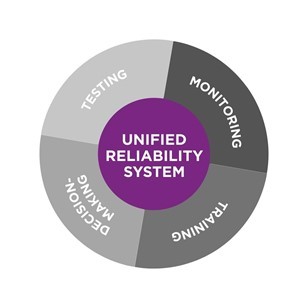
Truth 7: Reliability Is a System, Not a Test
No single test guarantees transformer reliability.
It’s the system—the people, the training, the procedures, and the follow-through—that builds resilience. Transformer reliability must be embedded in operational culture with clear roles and repeatable processes.
Programs aligned with modern reliability standards emphasize documentation, standardized procedures, training, and accountability—turning transformer reliability into a repeatable process rather than a reactive effort.
Truth 8: Your Fleet Is Only as Strong as Its Weakest Link
Transformers fail collectively.
The weakest unit can interrupt operations and create disproportionate risk. Fleet-level reliability involves benchmarking all assets across condition, criticality, age, and risk to enable smarter capital planning and life-extension strategies.
Without a fleetwide lens, organizations often over-maintain healthy units while missing early warning signs on high-risk assets. Fleet reliability unlocks operational transparency, budget clarity, and measurable return on reliability investment.
Conclusion
Transformer reliability is not built on reaction—it’s built on recognition.
These Eight Truths provide a practical framework for identifying vulnerabilities, structuring maintenance programs, and extending transformer life across diverse industries and operating conditions. Whether managing five transformers or five hundred, organizations that prioritize and apply these truths through smarter maintenance and training programs, actionable monitoring, and fleet-level planning position themselves for fewer failures, longer asset life, and a safer, more resilient power system.
Prioritize reliability and safety by partnering with the experts.
Reliability doesn’t happen overnight. SDMyers is the expert in end-to-end transformer care, backed by 60+ years of testing and monitoring data and training experience. Partnering with SDMyers means more uptime and increased peace of mind.
Contact SDMyers to start your reliability journey.
Phone: (330) 630-7000 | Customer Service: (330) 632-8564 | info@sdmyers.com
About the Author

Jon Bucciarelli is President of SDMyers, LLC, an electric reliability company specializing in transformer maintenance, fluid testing, field service, and fleet reliability. In addition to being focused on transformer life-extension services, SDMyers is a community-aligned company focused on advocating for its customers while building a “Good Place”—a common attitude governed by Biblical principles and values.
As a gifted leader in engineering, coaching, speaking, and business management, Jon is passionate about serving others and inspiring change. He models a leadership style that prioritizes serving the greater good through setting vision, empowering team members, and building community. Jon has presented at industry conferences, spoken at events, and published articles on maintenance and reliability in Transformer Technology and other industry-leading publications.
Jon holds a BS in Mechanical Engineering from The University of Akron and an MS in Operations Management from Kettering University.
 Please wait while logging in.